
March 2026 Week 1 | Crosscurrents, Cracks, and What the Data Says
The Big Picture
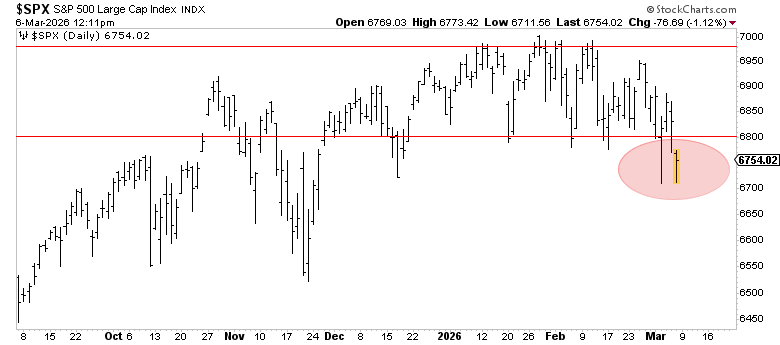
The S&P 500 has turned negative on the year. After five months of coiling between 6,800 and 7,000, the index decisively failed at 6,900 resistance and is now trading around 6,735 — below both its 50-day and 100-day moving averages for the first time since the April 2025 tariff shock. The all-time high of 7,002 (January 28) feels like a long time ago.
What changed? Three things hit simultaneously:
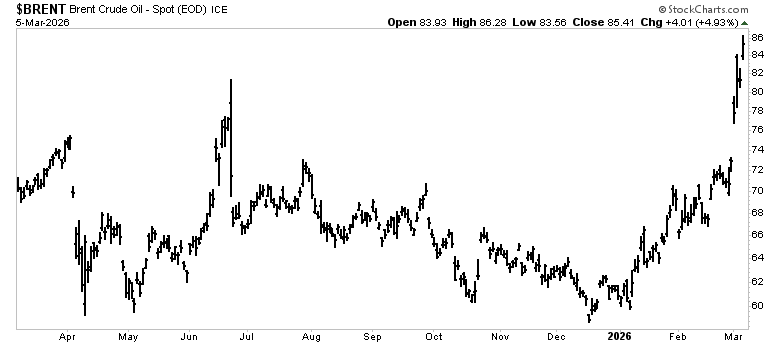
- The Iran conflict — Joint US-Israeli strikes beginning February 28 effectively shut down the Strait of Hormuz. Brent crude broke above $90/bbl, up 26% in a week. The Strait handles ~20% of global oil supply. War-risk insurance for tanker transits has been pulled — effectively closing the waterway to commercial traffic regardless of any military posture.
- A shocking jobs report — February payrolls came in at -92,000, missing consensus by over 140,000. That's the third negative print in five months. Unemployment edged up to 4.4%, December's numbers were revised 65,000 lower, and the average duration of unemployment reached 25.7 weeks — a level not seen since late 2021.
- Sticky inflation + a boxed-in Fed — CPI at 2.4%, with the Fed’s preferred PCE gauge still near 3%. 10-year yields surging above 4.17%. The Fed is trapped: the labor market is weakening, but oil-driven inflation pressures are building. Rate cuts feel off the table. The January FOMC minutes even floated the possibility of raising rates. The word “stagflation” is back in circulation.
Short-Term Trend: 8 EMA / 21 EMA — Bearish
The short-term picture is clearly bearish. With the S&P 500 dropping from 6,900 to 6,735 in under two weeks, the 8-day EMA has crossed below the 21-day EMA — a short-term sell signal. Price action has been one-directional: lower highs, lower lows. The February chop saw seven crossings of the 50-day SMA alone — but this latest move has conviction behind it.
For those using the 8/21 EMA crossover as a tactical timing tool: the signal flipped bearish in late February and hasn't looked back.

Intermediate-Term Trend: 21 EMA / 50 SMA — Bearish
The intermediate picture is where things get interesting. The S&P 500 broke below its 50-day SMA (~6,863) on February 27 and hasn't reclaimed it. It then broke below the 100-day (~6,835) on March 5. The 21-day EMA has rolled over and crossed below the 50-day SMA — confirming the intermediate trend has turned bearish.
This is the transition zone. The short-term is already bearish. With the 21 EMA now below the 50 SMA, the intermediate trend has joined the short-term in bearish territory. The only thing left holding is the long-term 200-day.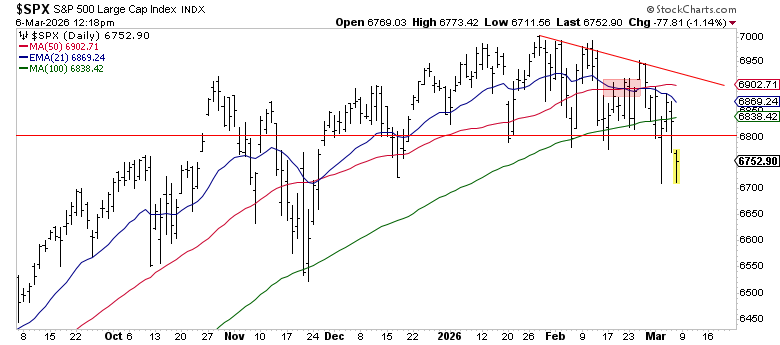
The 200-Day: Line in the Sand
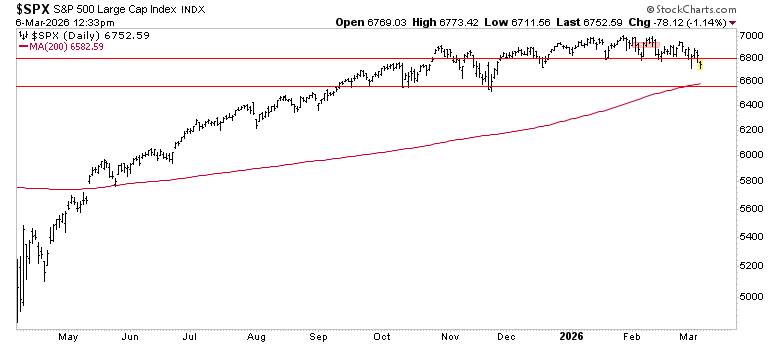
The 200-day SMA sits around 6,580-6,612. That's roughly 2% below current levels. As long as the S&P holds above it, the long-term uptrend remains technically intact.
Key support levels to watch on the way down:
- 6,800 — critical near-term support, “risk-off” trigger
- 6,580 — 200-day SMA, the big one
The Great Rotation: Bits to Atoms
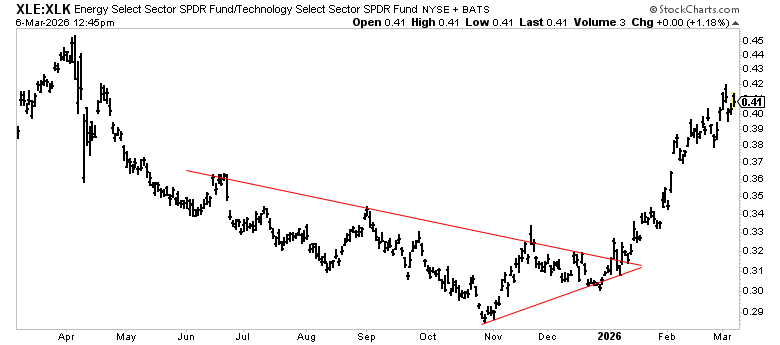
The biggest story of 2026 isn't the Iran war or the jobs miss — it's the sector rotation that was already underway before either happened.
Returns since the October 29 market high:
| Sector | Return Since Oct 29 High |
|---|---|
| Energy | +30% |
| Materials | +17.5% |
| Staples | +13% |
| Industrials | +12% |
| Real Estate | +8.4% |
| Health Care | +8% |
| Utilities | +5.5% |
| Communications | +2.8% |
| Financials | -0.7% |
| Discretionary | -1.75% |
| Technology | -7.08% |
Capital is flowing from software multiples into tangible assets — oil, defense, metals, infrastructure. The Iran conflict poured gasoline on a fire that was already burning.
Yields & The Bond Market: No Safe Haven
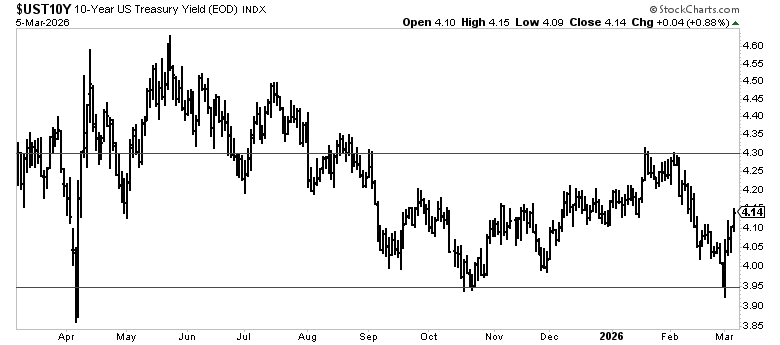
The 10-year Treasury yield surged above 4.17% this week — its highest level since mid-February — and the move tells you everything about where this market's head is at.
Normally, geopolitical stress sends investors into Treasuries and pushes yields lower. That playbook isn't working this time. Instead, yields are rising into a war because the inflationary implications of $90 oil are overpowering the flight-to-quality instinct.
- 10-Year Yield: 4.17%, up sharply from below 4.00% in late February
- 2-10 Spread: Widened to 57 basis points — the curve is steepening, signaling rising inflation expectations
- Rate cut expectations: Markets now pricing one to two 25bp cuts for 2026, with July as the earliest likely window
The message from the bond market is clear: don't count on the Fed to bail this out.
Volatility and Sentiment
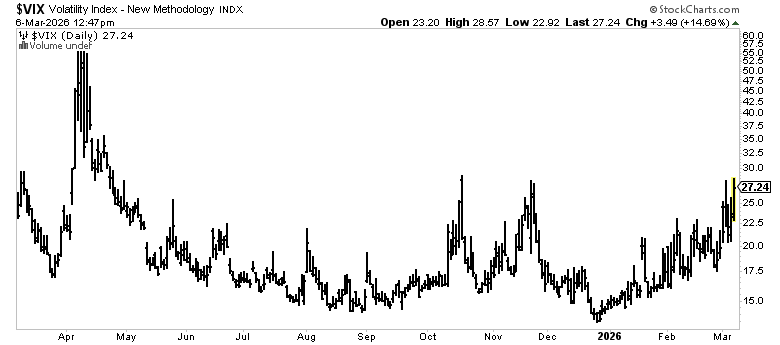
VIX: 23-28 range. Elevated, rising, but not panicked. A push toward 30 is possible if the 200-day SMA breaks.
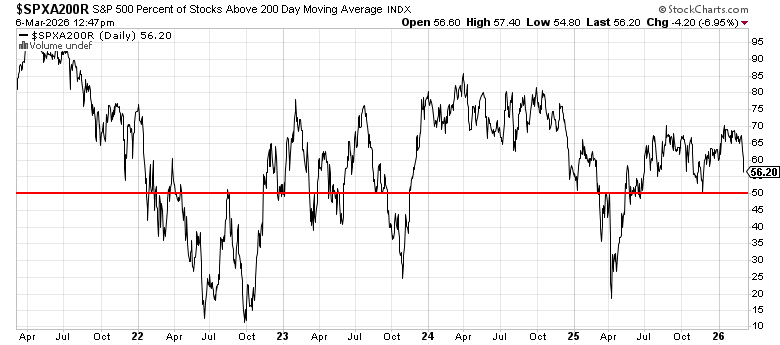
Breadth: Deteriorating. Only 56% of S&P 500 stocks above their 200-day MA. The advance/decline line is trending down even as the index stays relatively close to highs. Narrow leadership is a warning sign.
Want to see the full analysis, know what our systematic signals are saying, and how we're positioned?
See the full dashboard →
Want the Signals, Model Portfolio, and Backtests?
This is the free analysis. The full dashboard gives you regime signals, monthly stock rankings, position sizing to the dollar, and 95+ years of backtested data.
Get AccessGet Weekly Market Analysis Like This — Free
Data-driven insights on macro trends, momentum, and what we're watching. Delivered to your inbox every week.